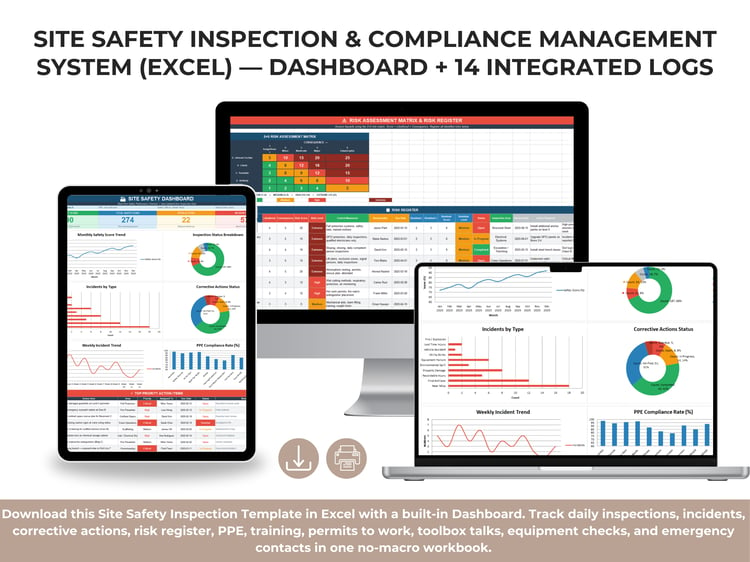
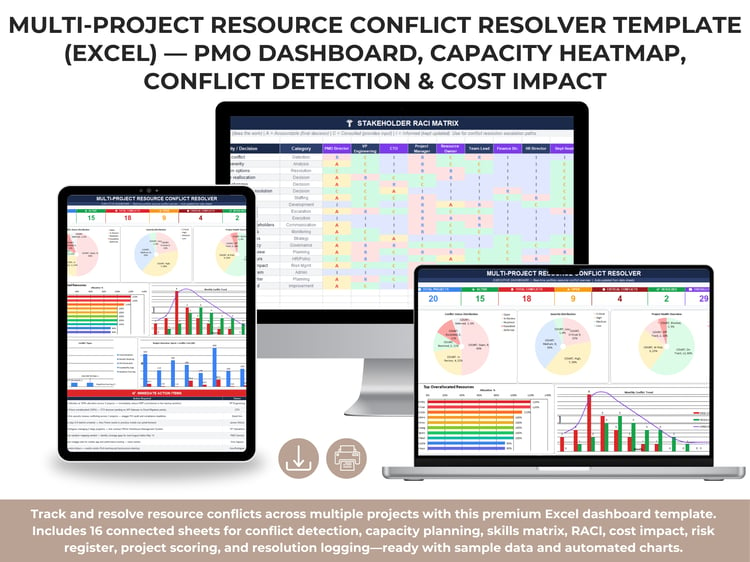
End-to-end baseline governance for scope, schedule, cost, risk, quality, resources, and executive reporting.
The Project Baseline & Variance Control System is a premium, enterprise-style Excel template built for project managers, PMOs, transformation offices, and delivery leaders who need tight control over project performance from initiation through closure.
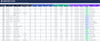
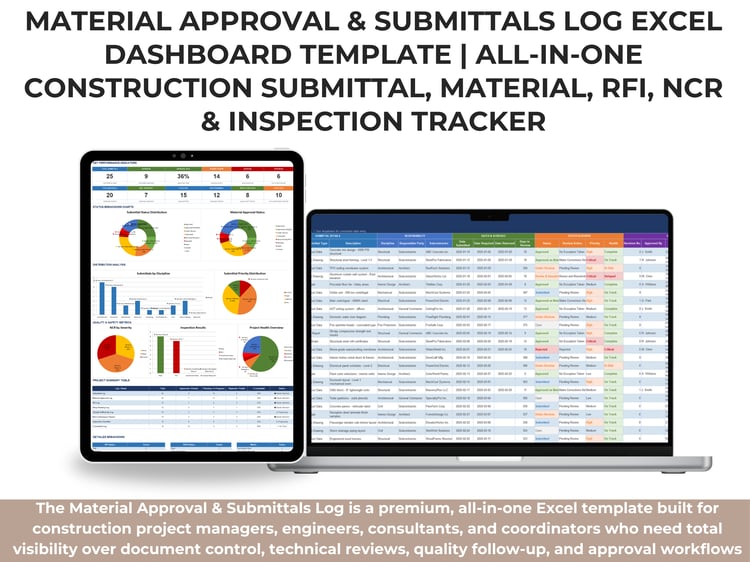
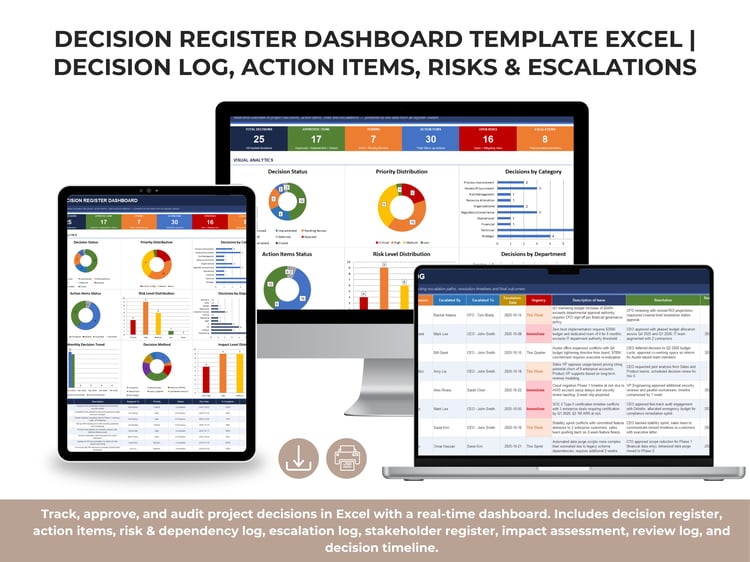
This is more than a dashboard. It is a full project control environment where every critical register is connected: baselines, progress, variances, earned value, risks, changes, quality, stakeholders, communication, milestones, and resource/cost tracking.
All sheets are structured for operational use, formula-driven, and enhanced with conditional formatting so teams can identify issues early and make decisions quickly.
What This Template Helps You Do
✅ Establish approved baselines for scope, schedule, and cost
✅ Track actuals vs baseline at item, task, and work-package level
✅ Quantify variance with root causes, ownership, and corrective actions
✅ Manage change requests with impact on scope/time/cost
✅ Monitor risk exposure with response and contingency planning
✅ Run earned value analysis (PV, EV, AC, SPI, CPI, EAC, ETC, VAC, TCPI)
✅ Control milestones, dependencies, and health status across phases
✅ Track stakeholder engagement and communications in one governance flow
✅ Monitor quality readiness and corrective actions before go-live
✅ Produce executive-level visibility with KPI cards and visual analytics
Template Modules Included
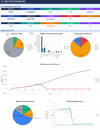
1) Executive Dashboard
A leadership-ready control center showing project status at a glance:
- KPI strip for completion %, BAC, SPI, CPI, CV, AC, EV, EAC
- Open risks and open change requests counters
- Scope status distribution
- Budget vs actual by cost category
- Risk severity distribution
- EVM S-curve (PV vs EV vs AC)
- Milestone health and SPI/CPI monthly trends
- Top action items and escalation alerts
This sheet is designed for steering committees, sponsors, and PMO reviews.
2) Work Breakdown Structure (WBS)
A structured decomposition of project deliverables and work packages:
- WBS code hierarchy with parent-child structure
- Owner and status by package
- Planned vs actual hours
- Planned vs actual cost
- Cost variance and earned value by work package
- % complete roll-up logic
This creates the structural foundation for all baseline control and EVM consistency.
3) Scope Baseline Register
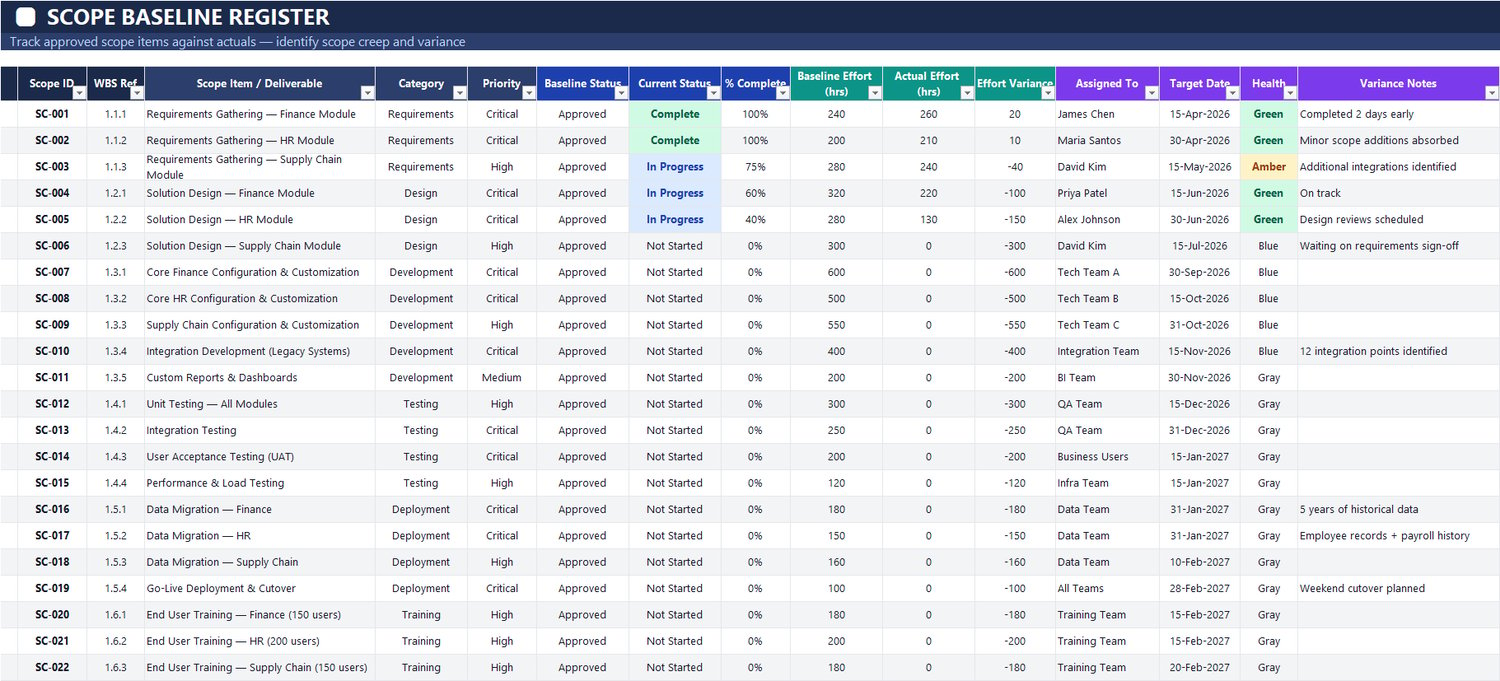
A controlled register of approved scope items and deliverables:
- Scope IDs mapped to WBS references
- Baseline status vs current status
- Priority, assigned owner, target dates
- Baseline effort vs actual effort
- Effort variance and health flags
- Variance notes to expose scope creep early
Useful for validating whether scope growth is controlled or uncontrolled.
4) Schedule Baseline
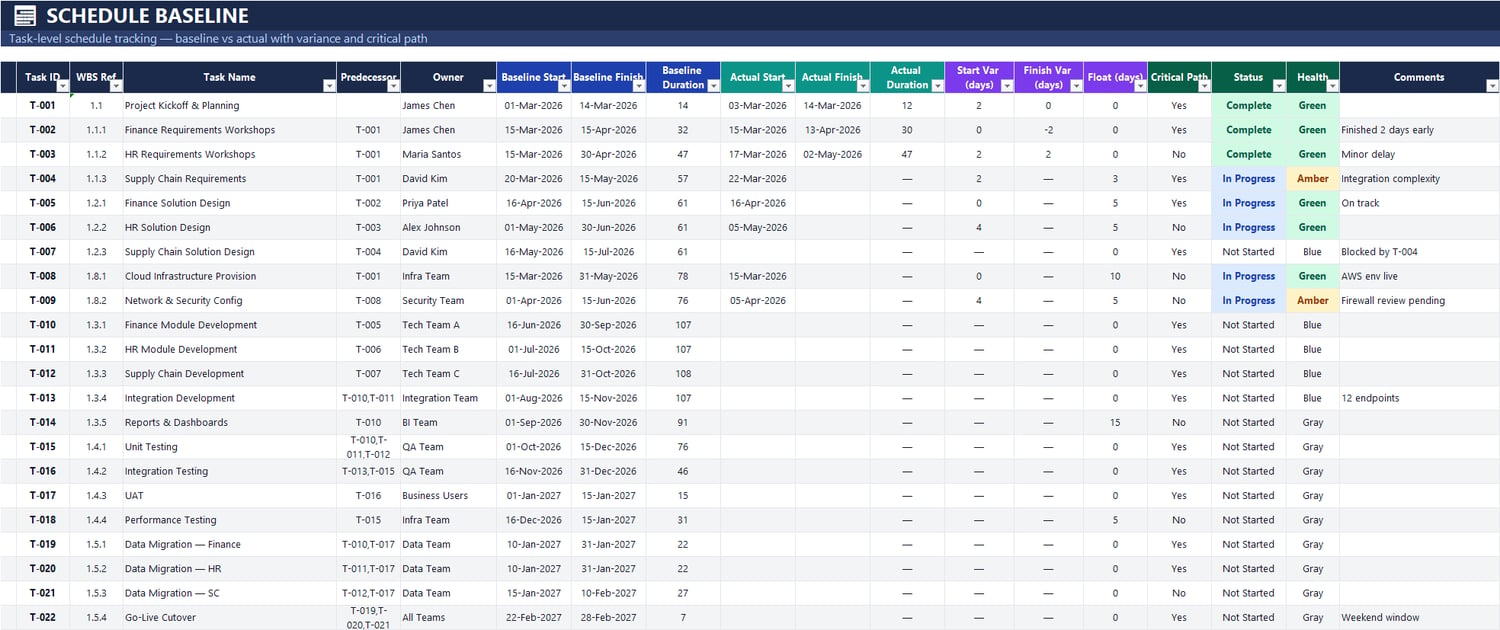
Task-level schedule governance with baseline vs actual timelines:
- Baseline start/finish vs actual start/finish
- Baseline duration vs actual duration
- Start variance, finish variance, float
- Predecessor dependencies and critical path flags
- Task status and health indicators
- Comments for delay reason capture
Supports timeline forecasting and critical path risk detection.
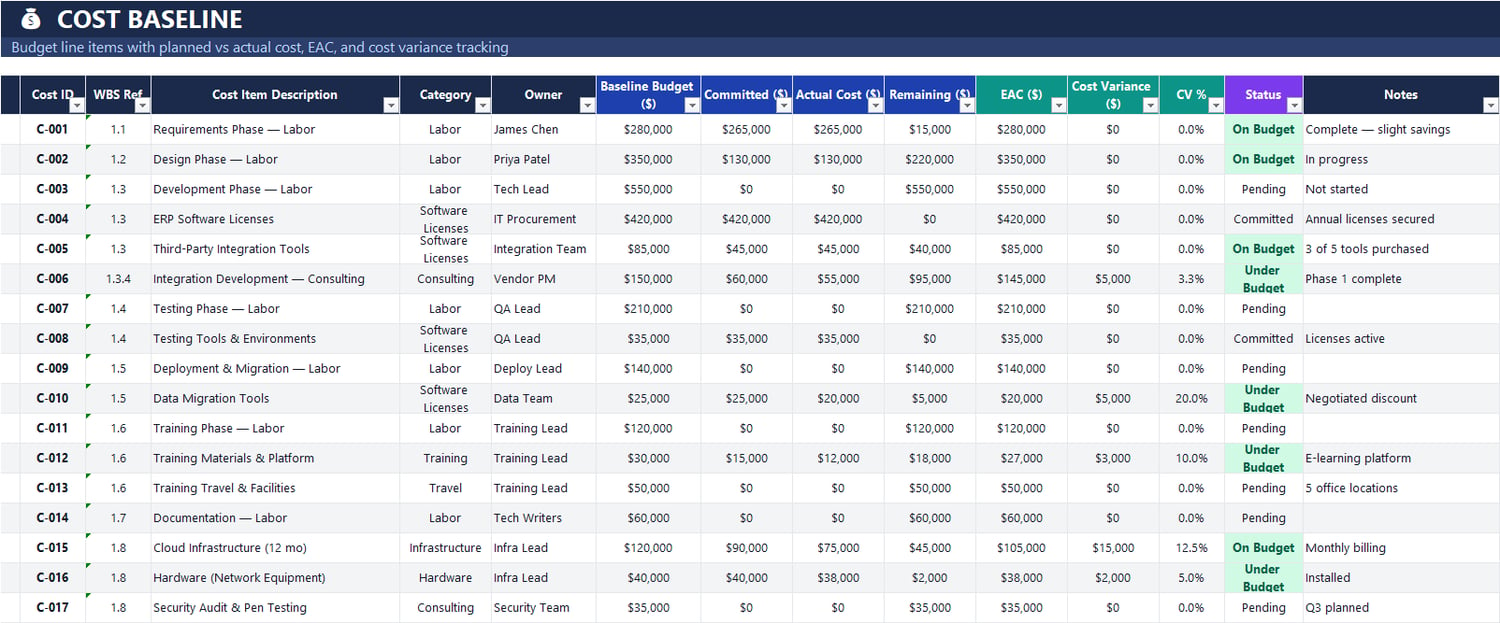
5) Cost Baseline
Detailed budget tracking by cost line items:
- Baseline budget, committed, actual, remaining
- EAC and cost variance
- CV% and cost status (on budget/under budget/pending/committed)
- Owner accountability by cost category
- Notes for procurement, savings, or overrun risk context
Enables clean cost governance across labor, licenses, consulting, infra, training, and more.
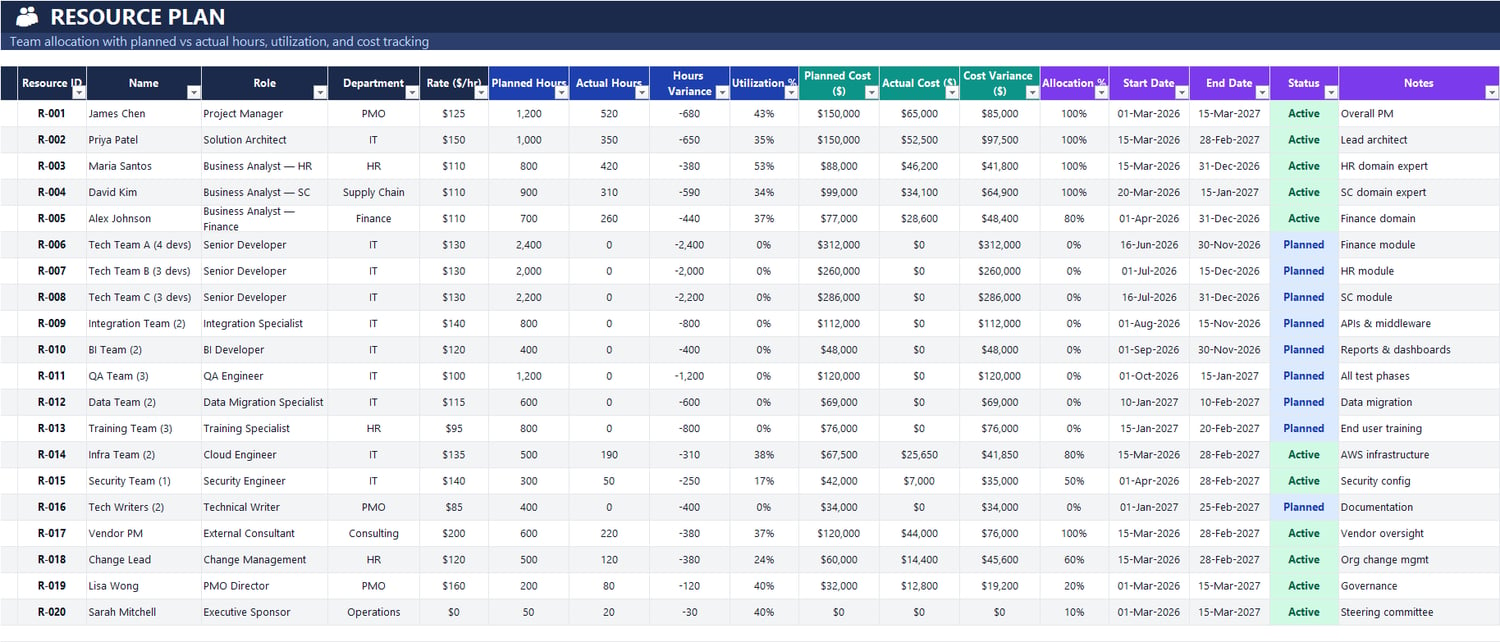
6) Resource Plan
Comprehensive planned vs actual resource utilization and spend:
- Role-based resource roster and departments
- Hourly rates, planned hours, actual hours
- Utilization %, allocation %, and hours variance
- Planned cost vs actual cost with cost variance
- Assignment windows (start/end), status, and role notes
Great for capacity planning, burn-rate awareness, and staffing decisions.
7) Variance Analysis
A consolidated variance log across scope, schedule, cost, quality, and resources:
- Baseline value vs actual value
- Numeric and percentage variance
- Severity classification
- Root cause analysis
- Corrective actions
- Owner, target date, and resolution status
- Impact statements and notes
This is where your governance moves from reporting to control action.
8) Earned Value Management (EVM)
Full EVM engine for performance measurement and forecasting:
- BAC, PV, EV, AC
- SV and CV
- SPI and CPI
- EAC, ETC, VAC
- TCPI and completion ratios
- Monthly tracking table for trend analysis
- Interpretation guide for faster performance diagnosis
Built to support formal PMO reporting and sponsor discussions on forecast confidence.
9) Risk Register
Full risk governance with mitigation accountability:
- Probability, impact, risk score, severity
- Response strategy (mitigate/avoid/transfer/accept/escalate)
- Response plan, trigger conditions
- Risk owner and status
- Contingency plan and residual risk
- Last reviewed and notes
Helps maintain proactive risk posture, not reactive firefighting.
10) Change Log
Structured control of approved and pending change requests:
- CR ID, requestor, date submitted
- Domain and priority
- Scope/schedule/cost impact
- Approval status and dates
- Baseline update flag
- Notes for funding, constraints, and implementation context
Keeps change control transparent and auditable.
11) Milestone Tracker
Phase-gate visibility from initiation to post-go-live:
- Baseline vs forecast vs actual milestone dates
- Variance days
- Status and health (RAG-style)
- Dependency mapping
- Deliverables and sign-off state
- Governance notes
Ideal for tracking gates, integration readiness, UAT, deployment, and closure.
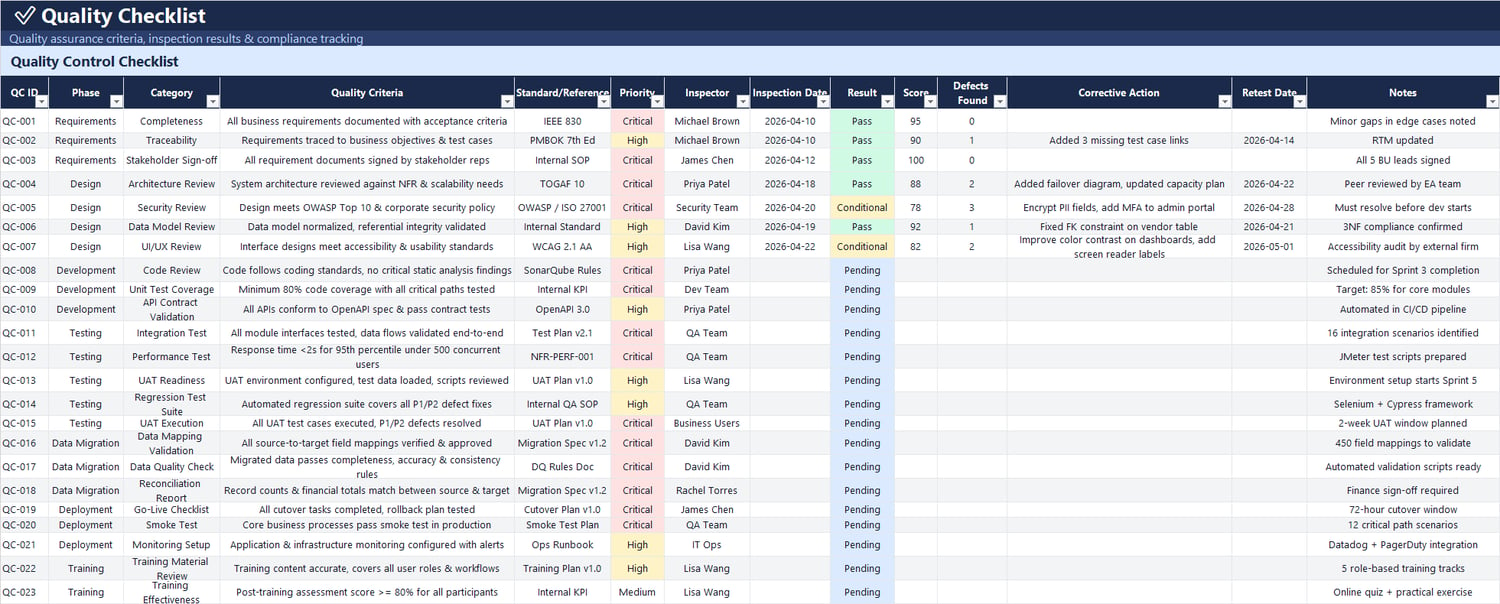
12) Quality Checklist
Project QA/QC readiness tracker:
- Quality criteria by phase/category
- Standard/reference mapping (SOP, framework, policy, etc.)
- Priority and inspector assignment
- Result tracking (pass/conditional/pending)
- Defects found, corrective actions, retest dates
- Compliance and readiness notes
Ensures quality is governed as a delivery stream, not a late checkpoint.
13) Stakeholder Register
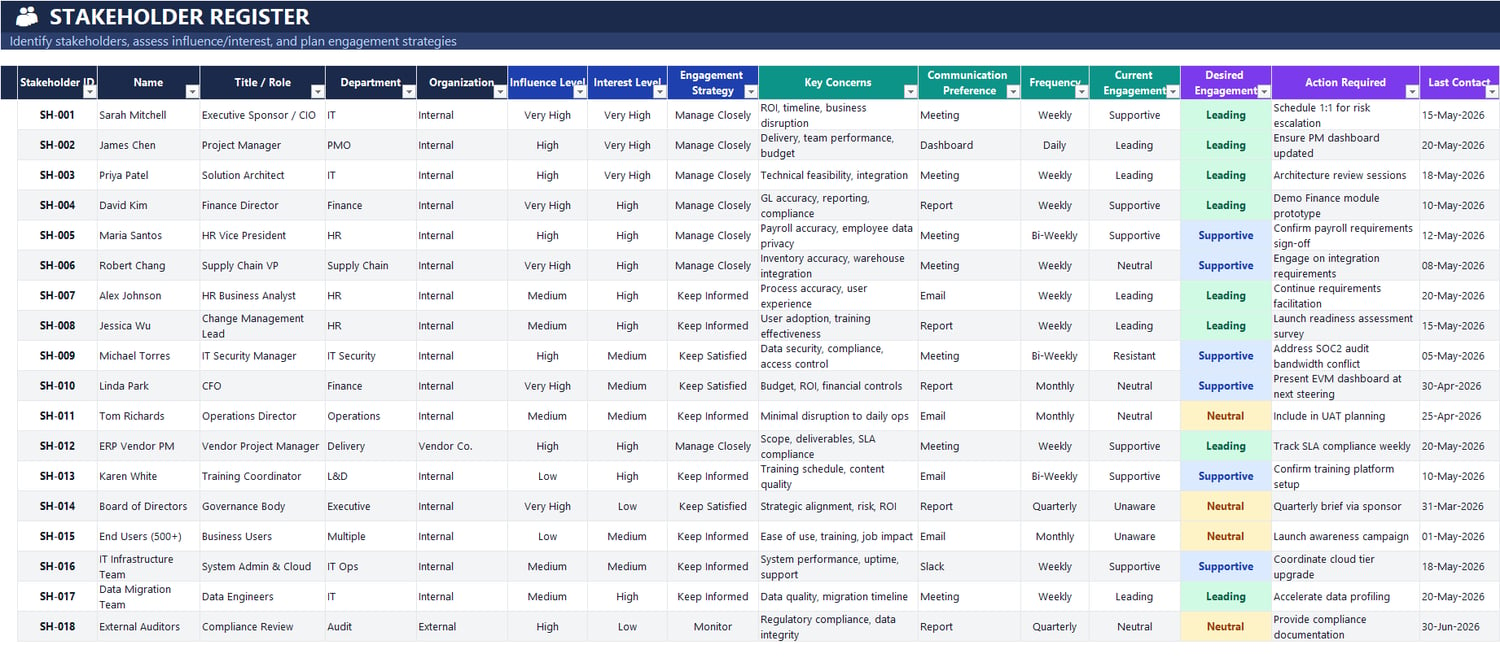
Influence-interest mapping and engagement strategy planner:
- Stakeholder role, department, and influence/interest levels
- Engagement strategy and communication preference
- Current vs desired engagement state
- Required actions and last contact tracking
- Key concerns by stakeholder group
Helps drive adoption, reduce resistance, and improve sponsor alignment.
14) Communication Plan
Operational communication matrix aligned with governance cadence:
- Communication purpose and audience
- Owner, frequency, channel, and format
- Day/time scheduling and duration
- Escalation path, status, last sent tracking
- Notes for pre-read and meeting requirements
This ensures governance cadence is repeatable and visible.
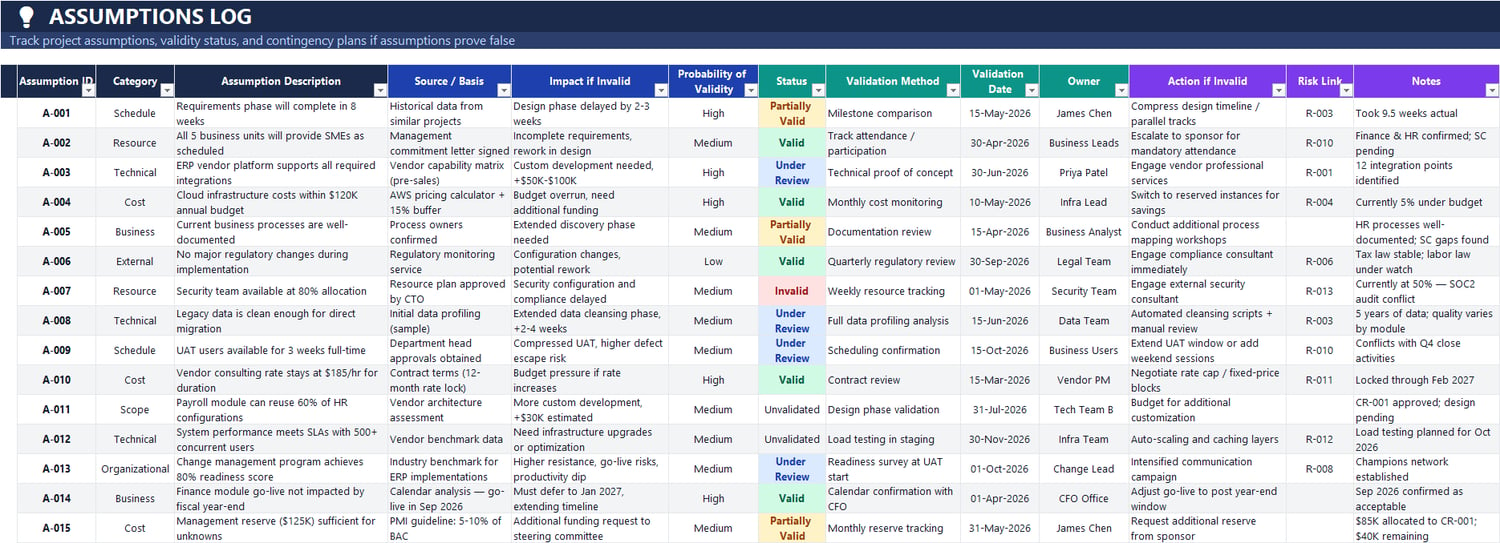
15) Assumptions Log
Structured assumptions governance with validation workflow:
- Assumption category and description
- Source/basis and probability of validity
- Impact if invalid
- Validation method and date
- Status (valid/partially valid/under review/invalid/etc.)
- Action if invalid and linked risk mapping
Reduces hidden exposure by converting assumptions into managed controls.
Why This Template Is Different
Most templates provide either a dashboard or a single register.
This system provides a connected control framework where:
- WBS anchors scope/schedule/cost logic
- Baselines are explicit and trackable
- Variances trigger actions, not just visuals
- EVM turns progress into measurable performance
- Risk, change, quality, and communication stay synchronized
- Executive reporting is always ready
Best Fit For
✅ PMOs and enterprise project teams
✅ ERP, digital transformation, infrastructure, and system implementation programs
✅ Project managers handling cross-functional delivery
✅ Sponsors and governance boards needing clear visibility
✅ Teams that need audit-friendly logs and structured controls
Key Outcomes You Can Expect
- Faster detection of schedule and cost drift
- Stronger baseline governance and change discipline
- Better forecast conversations with leadership
- Improved accountability across owners and workstreams
- Higher readiness for phase gates and go-live decisions
- Clear, consistent, executive-ready reporting cadence
Suggested Product Positioning Line
“One workbook. Full baseline control. Executive clarity from plan to closure.”