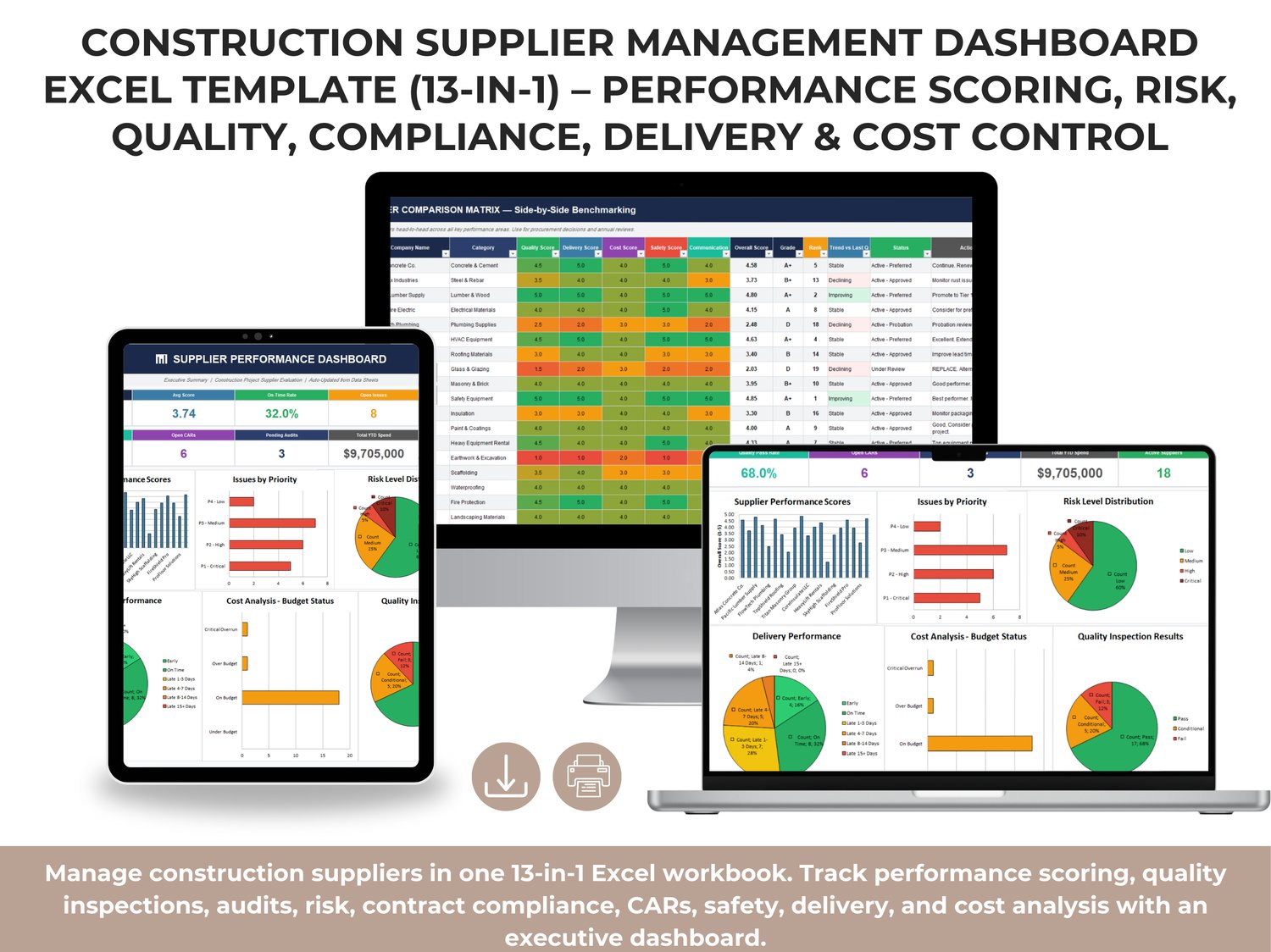
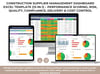
Manage your entire supplier ecosystem in one powerful, structured Excel workbook.
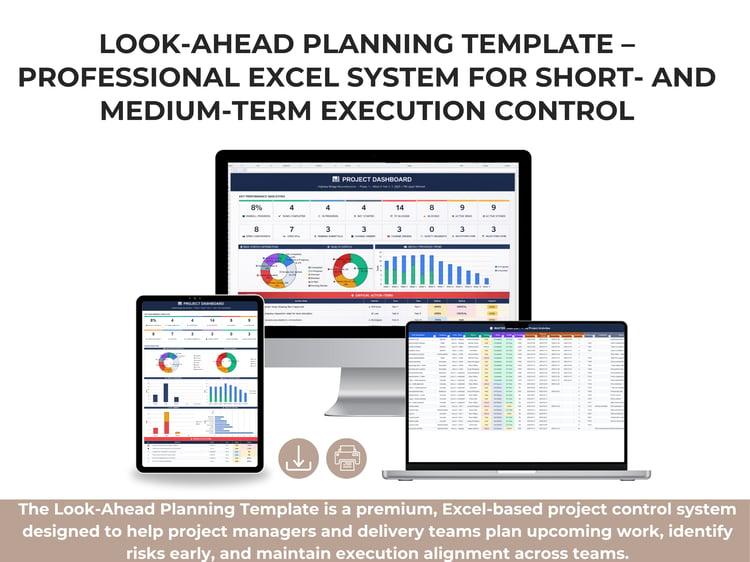
This template is a comprehensive supplier management system designed for construction projects. It helps project teams monitor supplier quality, delivery, safety, cost, compliance, risk, and corrective actions using connected logs and executive dashboards.
Built for real site operations, this workbook gives Construction Project Managers, Procurement Engineers, Contract Administrators, QA/QC teams, HSE officers, and Cost Controllers a single source of truth for supplier decisions.
Why This Template Is Essential
Supplier underperformance can cause delays, rework, cost overruns, compliance breaches, and safety incidents.
This workbook helps you prevent that by turning raw supplier data into clear, actionable insights.
With this file, you can:
✅ Evaluate suppliers with a standardized scoring model
✅ Track issues, audits, non-conformances, and CAR closures
✅ Monitor delivery reliability and schedule impact
✅ Control supplier-related cost variance and budget status
✅ Assess risk exposure and mitigation readiness
✅ Verify contract and certification compliance in one view
✅ Make confident decisions on preferred, probationary, or replacement suppliers
✅ Report to management with executive-ready metrics and visuals
What’s Included in the Workbook
This workbook is structured as an end-to-end supplier management framework with integrated sheets:
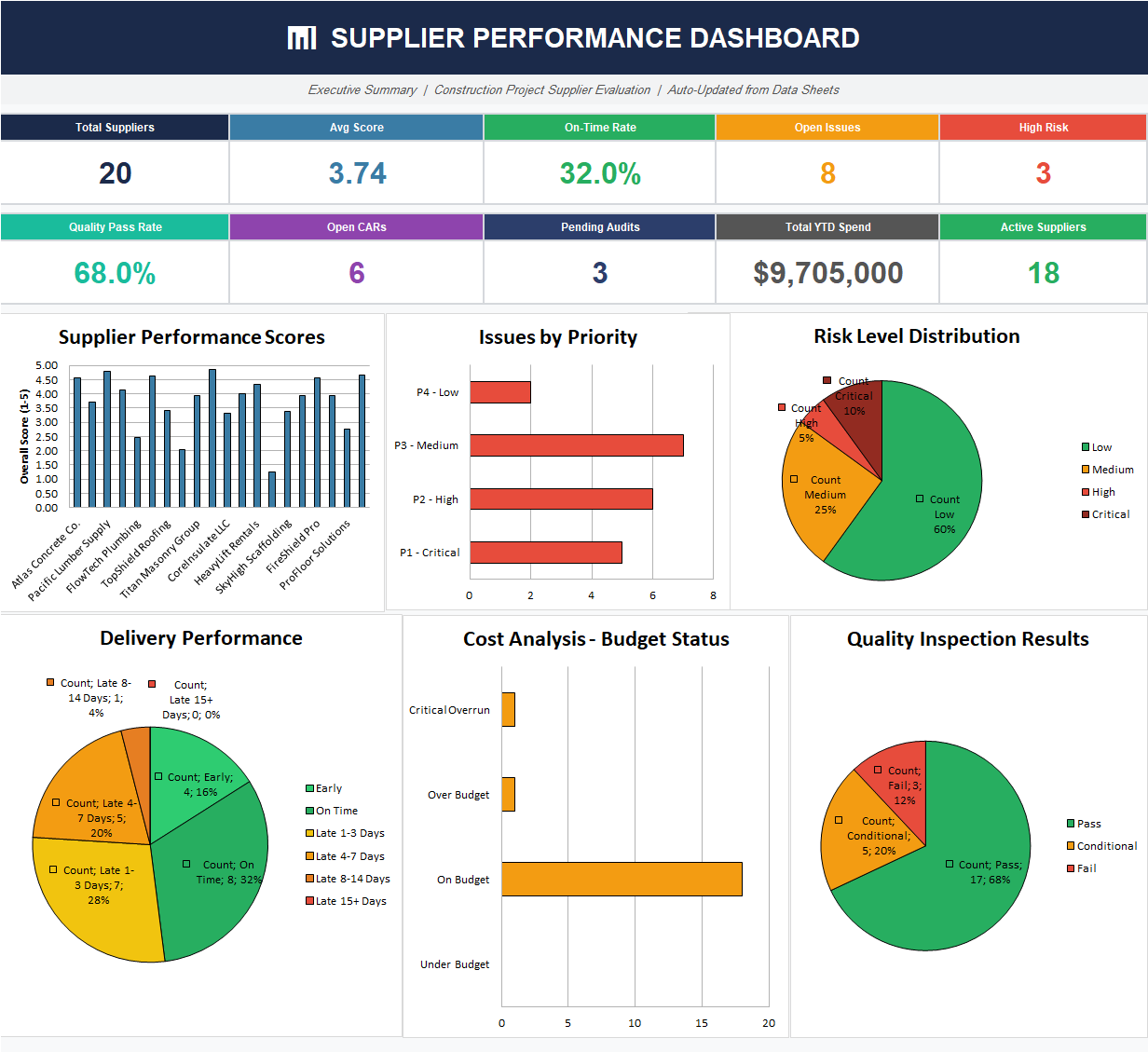
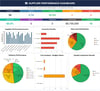
1) Supplier Performance Dashboard (Executive View)
A high-level control center showing key KPIs and trend visuals, including:
- Total suppliers
- Average supplier score
- On-time delivery rate
- Open issues and high-risk suppliers
- Quality pass rate
- Open corrective action requests (CARs)
- Pending audits
- Total YTD spend
- Active supplier count
Includes visual summaries for:
- Supplier performance scores
- Issues by priority
- Risk level distribution
- Delivery performance mix
- Budget status analysis
- Quality inspection outcomes
Best for weekly steering meetings, monthly reviews, and client reporting.
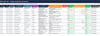
2) Supplier Registry — Master Supplier Database
Your centralized supplier master file, including:
- Supplier ID and company profile
- Category and region
- Contact details
- Contract start/end dates
- Payment terms and currency
- YTD spend and order volume
- On-time performance %
- Overall score and supplier status
- Risk level and notes
This sheet acts as the source list for evaluation and tracking sheets.
3) Supplier Performance Scoring — Quarterly Evaluation
A weighted supplier scorecard with 1–5 scoring dimensions:
- Material quality
- Defect rate
- On-time delivery
- Cost competitiveness
- Safety record
- Responsiveness
- Paperwork/document accuracy
- Change flexibility
- Regulatory compliance
Auto-calculates:
- Weighted overall score
- Grade (A+ to F style ranking)
- Recommendation (Preferred Partner / Continue-Monitor / Improvement Plan / Probation / Terminate-Replace)
Perfect for quarterly and annual supplier performance reviews.
4) Quality Assessment Log — Material & Workmanship Inspections
Track inspections at PO/material level:
- Quantity inspected/passed/failed
- Pass rate
- Result status (Pass / Conditional / Rejected / Rework)
- Defect type, severity, and root cause
- Inspector and evidence notes
- CAR reference linkage
Helps QA/QC teams maintain traceability and escalation discipline.
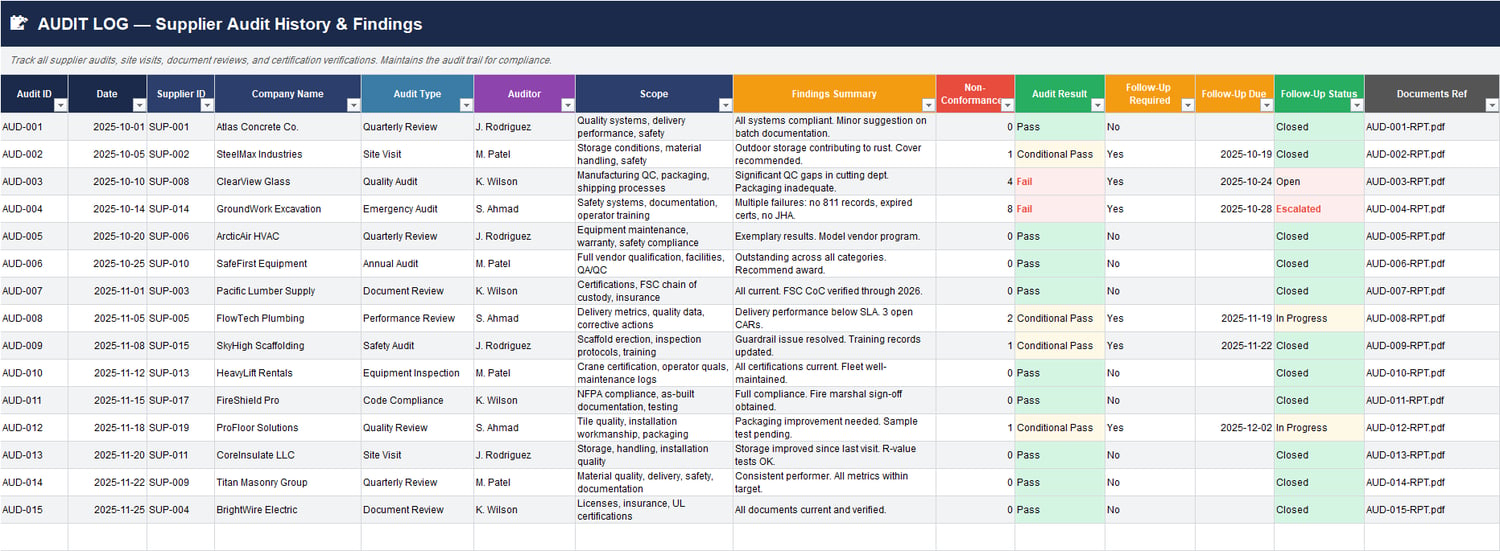
5) Audit Log — Supplier Audit History & Findings
Record all supplier audits and follow-up workflows:
- Audit type and scope
- Findings summary
- Non-conformance count
- Audit result
- Follow-up required/due/status
- Report document reference
Supports ISO-style governance, vendor qualification, and recurring review cycles.
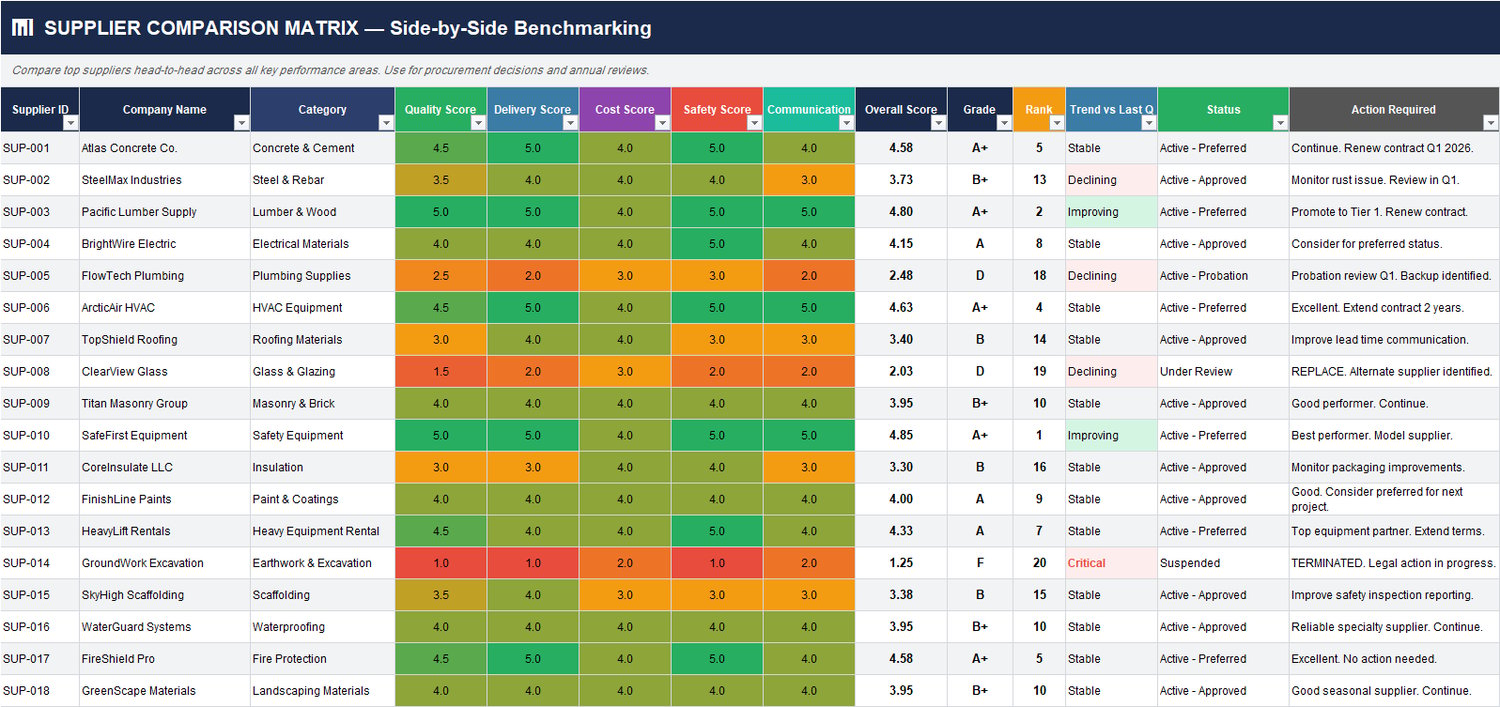
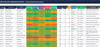
6) Supplier Comparison Matrix — Side-by-Side Benchmarking
Compare suppliers across key dimensions:
- Quality, delivery, cost, safety, communication
- Overall score and grade
- Rank and trend
- Status and action required
Useful for tender decisions, framework renewals, and preferred supplier selection.
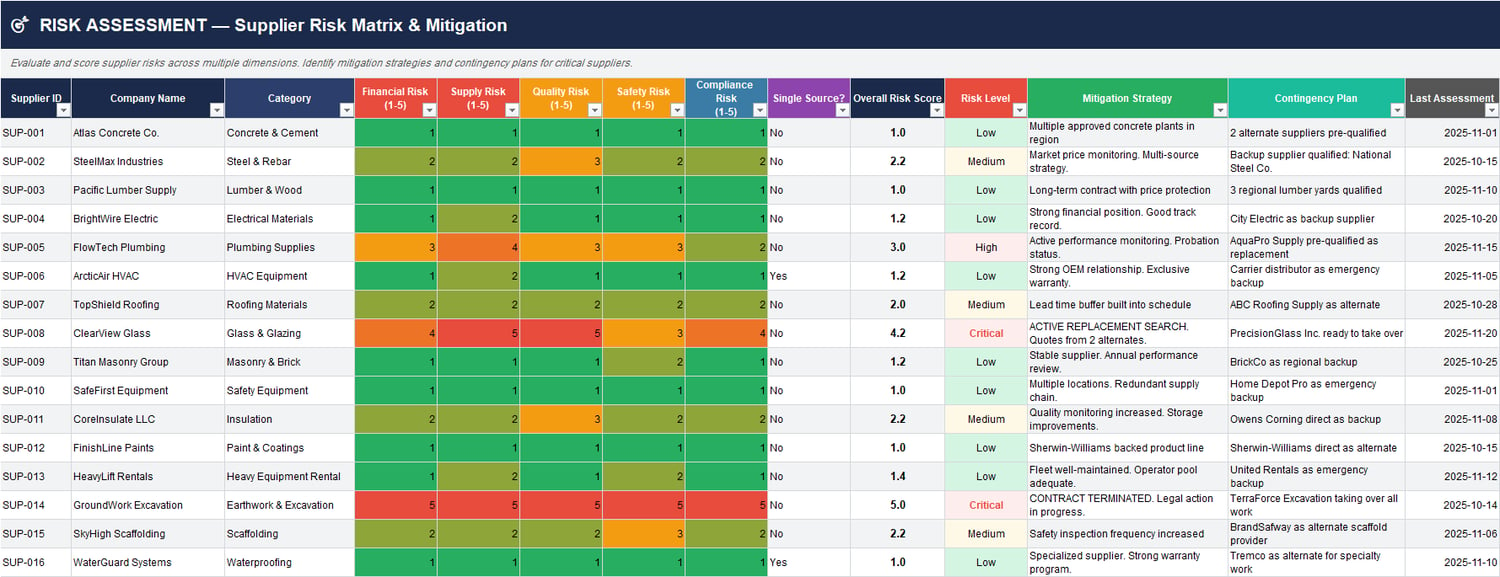
7) Risk Assessment — Supplier Risk Matrix & Mitigation
Evaluate supplier risk by category:
- Financial risk
- Supply continuity risk
- Quality risk
- Safety risk
- Compliance risk
- Single-source dependency
Includes:
- Overall risk score and level
- Mitigation strategy
- Contingency plan
- Last assessment date
Ideal for proactive risk planning and disruption preparedness.
8) Contract Compliance — Terms & Conditions Adherence
Monitor contract and regulatory obligations:
- Insurance validity
- License/certification validity
- Bond, warranty, and SLA compliance
- Expiry alerts (days to expiry)
- Last review date
- Overall compliance status
Prevents expired documentation and contract exposure.
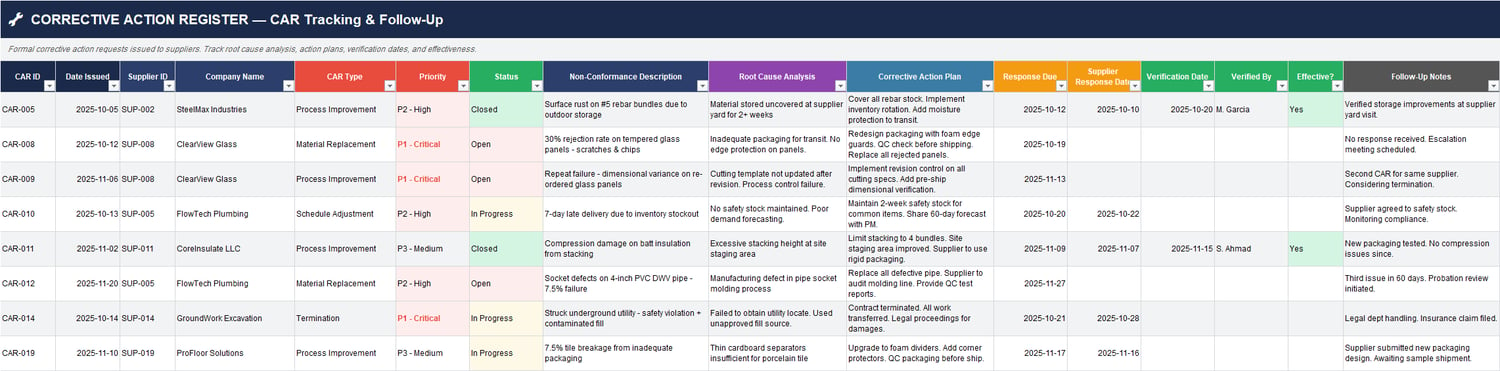
9) Corrective Action Register (CAR) — Tracking & Follow-Up
Track non-conformances through closure:
- CAR type and priority
- Non-conformance description
- Root cause analysis
- Corrective action plan
- Response due date / received date
- Verification date and effectiveness check
- Follow-up notes
Builds accountability and ensures closure discipline.
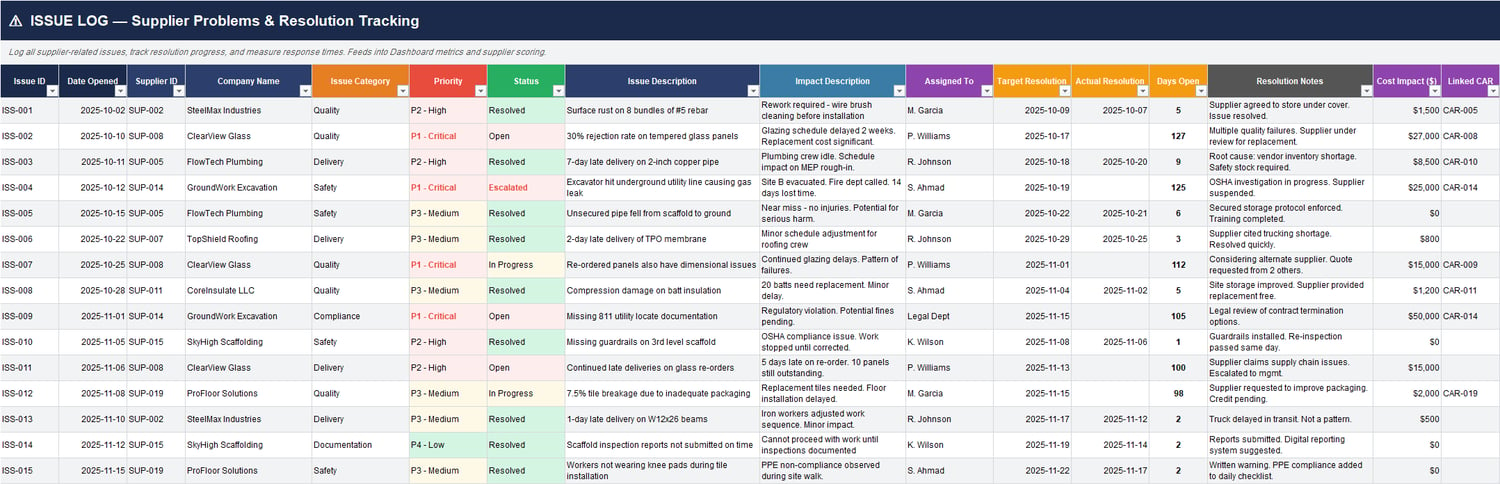
10) Issue Log — Supplier Problems & Resolution Tracking
Capture and manage supplier-related incidents:
- Issue category and priority
- Owner and target resolution date
- Escalation status
- Days open and actual closure
- Cost impact
- Linked CARs
Improves response time and cross-functional coordination.
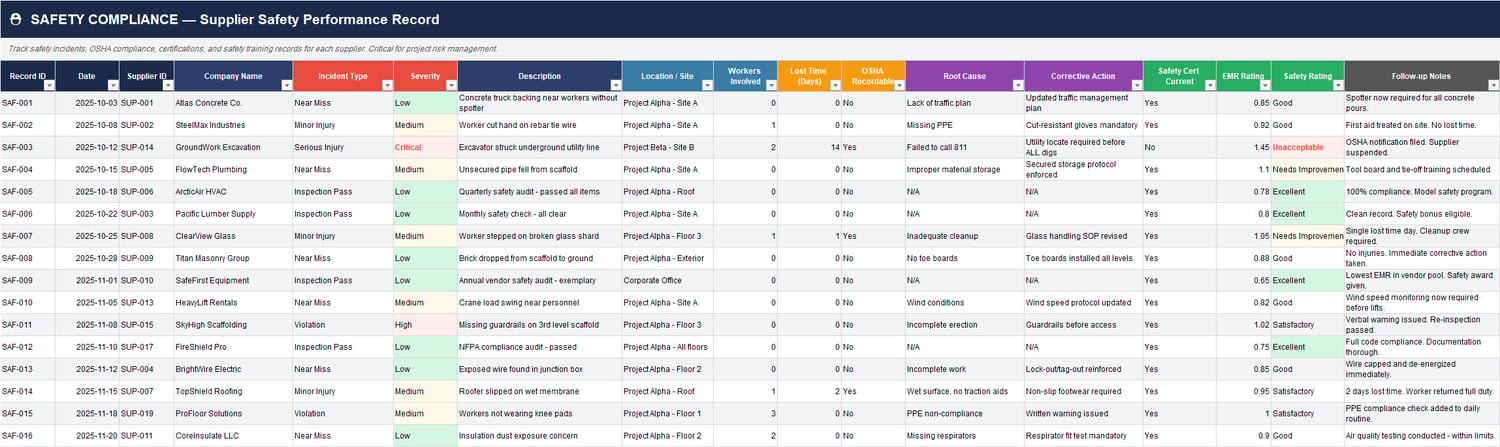
11) Safety Compliance — Supplier Safety Performance Record
Track supplier HSE performance and incidents:
- Incident type and severity
- Lost time days
- OSHA recordability
- Root cause and corrective action
- EMR and safety rating
- Follow-up notes
Supports safer subcontractor and vendor management.
12) Cost Analysis — Supplier Cost Performance & Budget Tracking
Control supplier financial performance:
- Original quote, change orders, revised budget
- Actual cost and variance ($ and %)
- Budget status (On Budget / Over Budget / Critical Overrun)
- Market rate benchmarking
- Competitiveness rating and cost notes
Links commercial evaluation to operational performance.
13) Delivery Tracking Log — On-Time Performance Monitoring
Track each delivery event and schedule impact:
- Scheduled vs actual delivery dates
- Delay variance (days)
- Delivery status bands
- Schedule impact and cost impact
- Receiver confirmation and notes
Great for procurement and site planning coordination.
Who Should Use This Template
This workbook is ideal for:
- Construction Project Managers
- Procurement & Sourcing Engineers
- Contract Managers / Commercial Teams
- QA/QC Engineers
- HSE Managers
- Cost Control & Project Controls Teams
- PMO and Operations Leaders handling multi-supplier projects
Key Benefits
✔ One integrated file for supplier governance end-to-end
✔ Clear scoring and grading model for fair evaluation
✔ Strong audit trail for compliance and reporting
✔ Faster issue escalation and corrective action closure
✔ Better vendor renewal, probation, and replacement decisions
✔ Executive-ready dashboard for leadership reviews
✔ Easy to adapt for buildings, infrastructure, MEP, industrial, and fit-out projects
Before You Use (Important)
- Start by updating the Supplier Registry as your master source.
- Use consistent Supplier IDs across all sheets for accurate cross-referencing.
- Enter data regularly (weekly is recommended) to keep KPI cards and charts meaningful.
- Keep dropdown values and status categories consistent for clean dashboard outputs.
- Archive closed periods (monthly/quarterly) if you are managing long-duration projects.
Final Value Proposition
If you need a practical, professional, and decision-ready supplier management system for construction, this workbook gives you everything in one place: performance, risk, quality, compliance, safety, delivery, and cost — all connected, measurable, and ready for action.