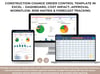
End-to-End Change Management System for Cost, Schedule, Risk, Approvals, and Executive Reporting
The Construction Change Order Control Template is a comprehensive, all-in-one Excel system built for Project Managers, Construction Managers, Cost Engineers, QS teams, and PMO leaders who need full control over project changes.
This professional workbook centralizes the full change-order lifecycle—from identification and approval to cost/schedule impact, risk tracking, communication records, document control, and lessons learned—inside one connected file.
It is designed to help construction teams make faster decisions, reduce delays, improve budget control, and deliver clear executive reporting at any stage of the project.
Why This Template Matters
Uncontrolled change orders are one of the most common reasons construction projects face:
- Budget overruns
- Schedule slippage
- Approval bottlenecks
- Documentation gaps
- Disputes between stakeholders
- Reduced forecast accuracy
This template solves those problems by giving your team a single source of truth with structured logs, built-in calculations, consistent status tracking, and dashboard-level visibility.
What This Template Helps You Do
✅ Track all change orders from submission to closure
✅ Quantify direct and indirect cost impacts automatically
✅ Measure schedule delay and float consumption by change order
✅ Control multi-level approvals and SLA performance
✅ Monitor budget movement, commitments, and forecast variance
✅ Log RFIs, documents, and stakeholder communications linked to each CO
✅ Assess risk severity and mitigation progress in real time
✅ Capture lessons learned to improve future project execution
✅ Present executive-ready KPIs and trend analytics in minutes
What’s Included in the Workbook
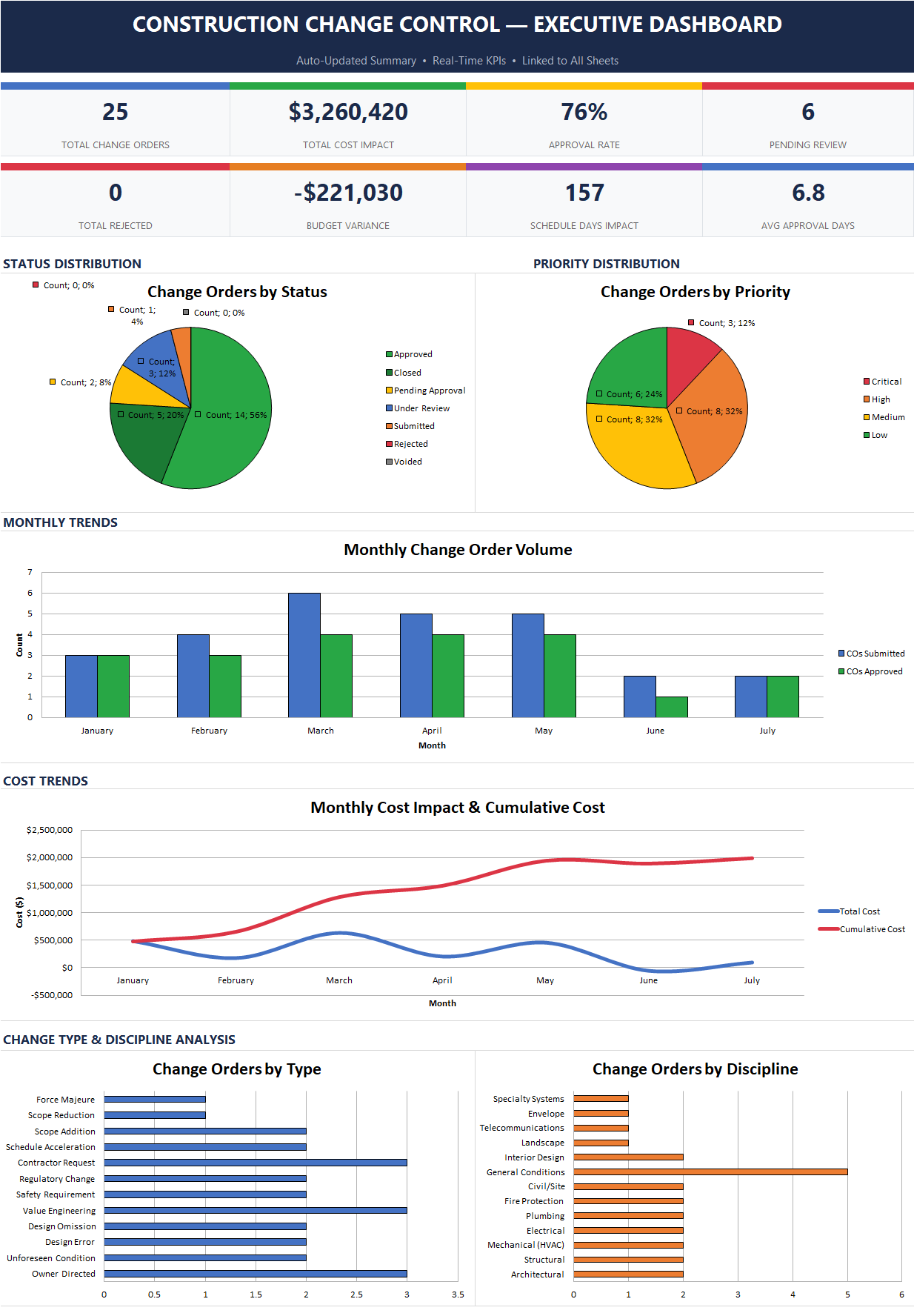
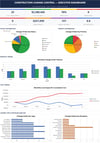
1) Executive Dashboard
A visual command center with real-time KPIs and charts for leadership reporting.
Includes:
- Total Change Orders
- Total Cost Impact
- Approval Rate
- Pending Review Count
- Budget Variance
- Total Schedule Days Impact
- Average Approval Days
- Status and Priority Distribution
- Monthly Volume and Cost Trends
- Change Type and Discipline Analysis
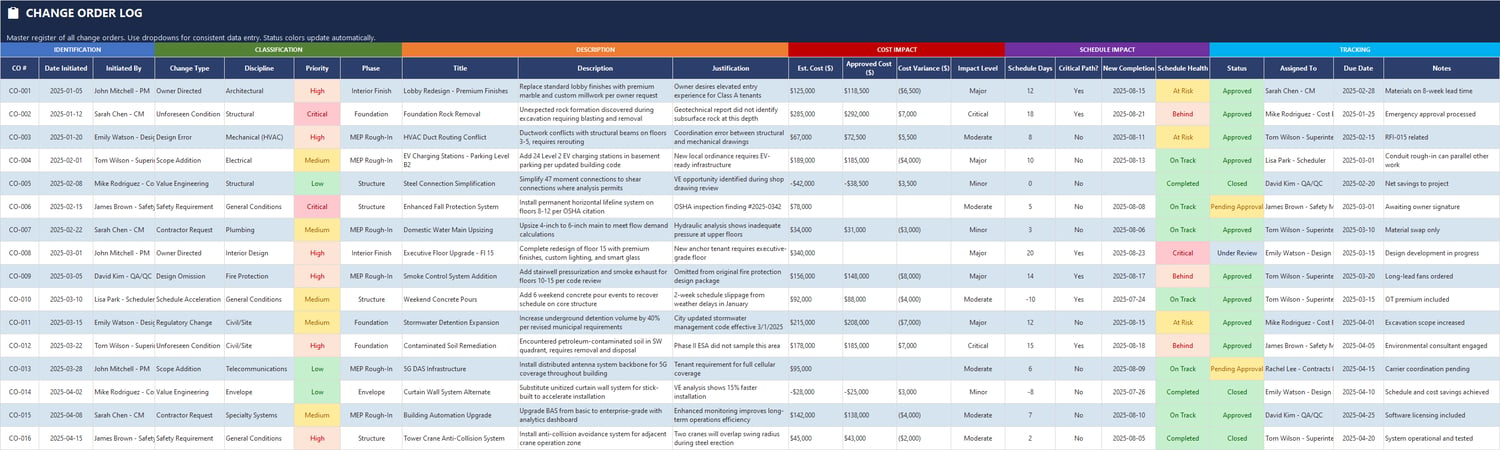
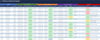
2) Change Order Log
The master register for all change orders and their lifecycle details.
Track:
- CO number, date, initiator, and discipline
- Change type and priority
- Scope description and justification
- Estimated cost, approved cost, and variance
- Impact level and schedule effect
- Completion status and health
- Assignment, due dates, and notes
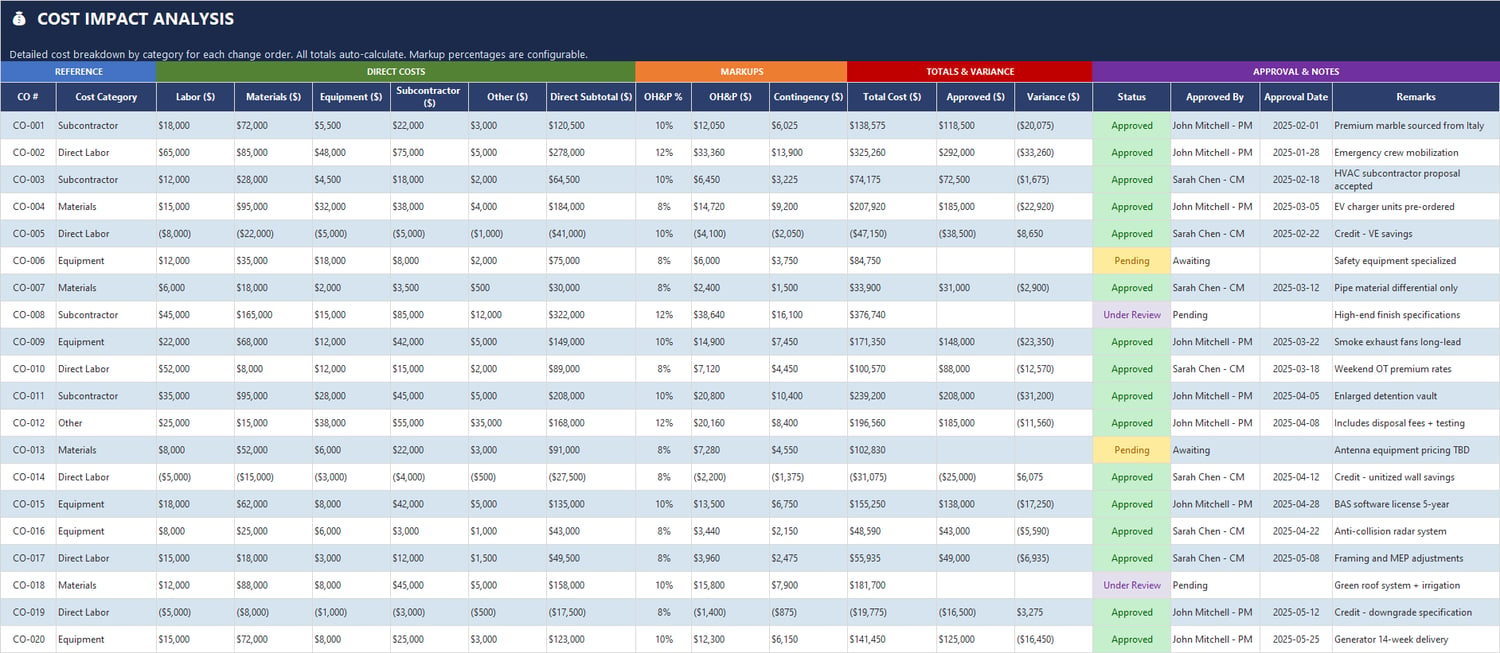
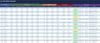
3) Cost Impact Analysis
A detailed cost engine for evaluating and approving financial impact per CO.
Includes:
- Labor, materials, equipment, subcontractor, and other direct costs
- OH&P and contingency configuration
- Total calculated CO cost
- Approved value vs. variance
- Approval status, approver, and remarks
- Negative-value and VE (value engineering) tracking support
4) Schedule Impact Tracker
Analyze how each change affects timeline performance and recovery actions.
Track:
- Original start/finish and original duration
- Available float and critical path influence
- Impact days and revised dates
- Net schedule effect
- Recovery plan and recovery days
- Revised completion and schedule health status
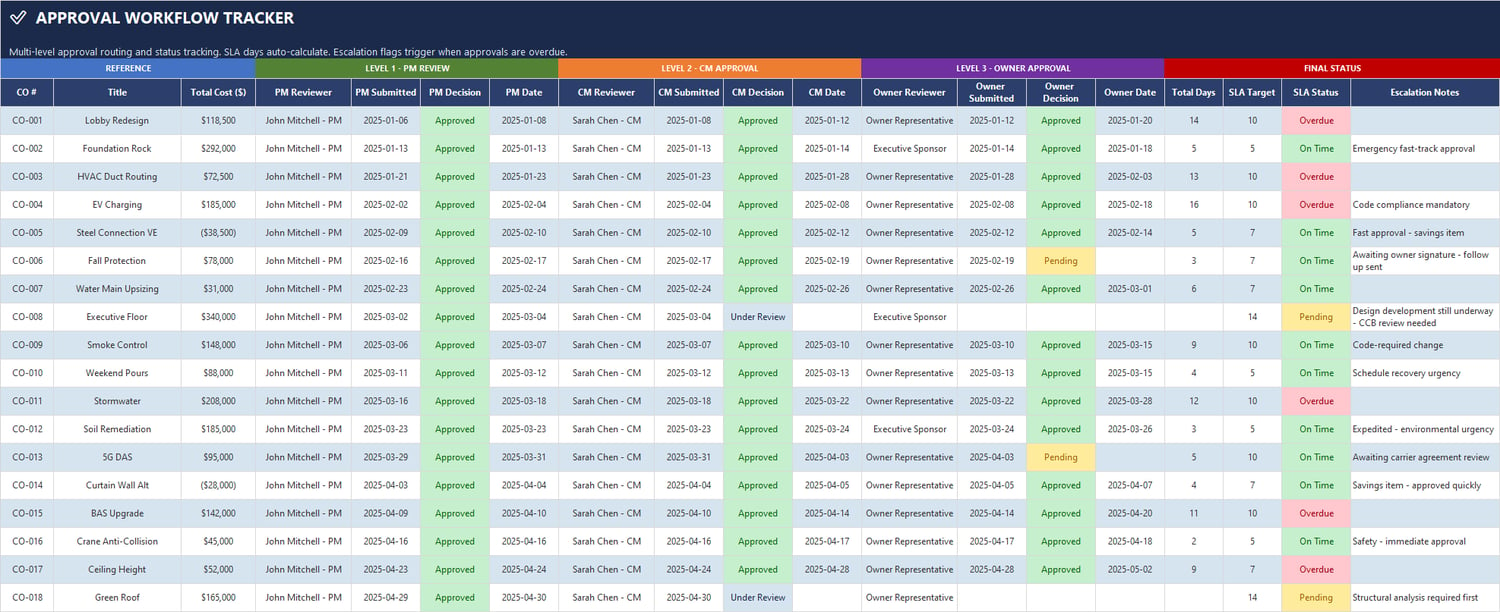
5) Approval Workflow Tracker
A multi-level approval matrix for structured governance and faster turnarounds.
Levels included:
- PM review
- CM review
- Owner approval
Monitors:
- Submission/decision dates at each stage
- Total approval cycle days
- SLA targets and SLA status
- Escalation notes for overdue approvals
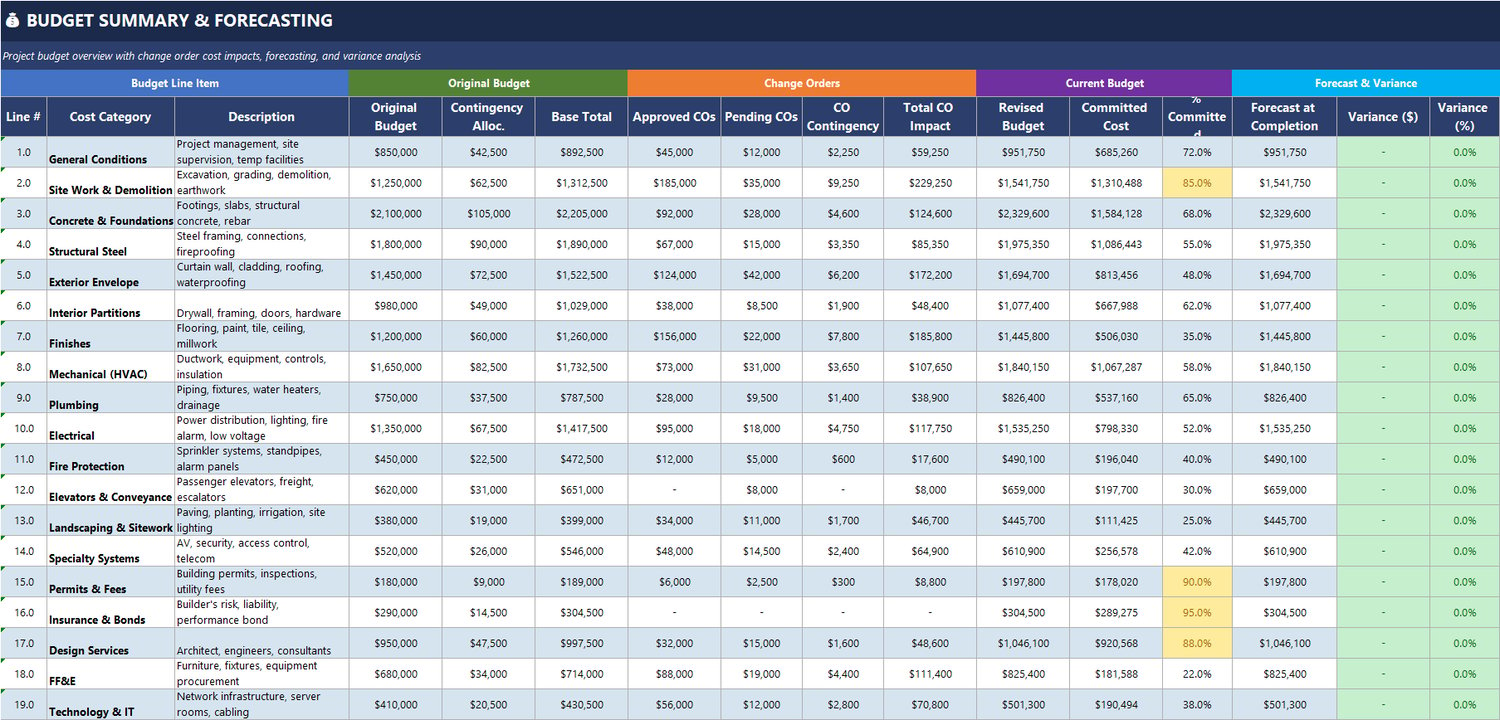
6) Budget Summary & Forecasting
Project-level budget control sheet with change integration and forecasting.
Includes:
- Original budget by line item/category
- Contingency allocation
- Approved and pending CO values
- Current revised budget
- Committed cost and commitment %
- Forecast-at-completion and variance metrics
7) Risk Assessment Matrix
Structured risk scoring for each change order with mitigation tracking.
Track:
- Probability and impact
- Risk score and risk level
- Risk category and root cause context
- Trigger events and consequences
- Mitigation strategy and owner
- Review dates and residual risk status
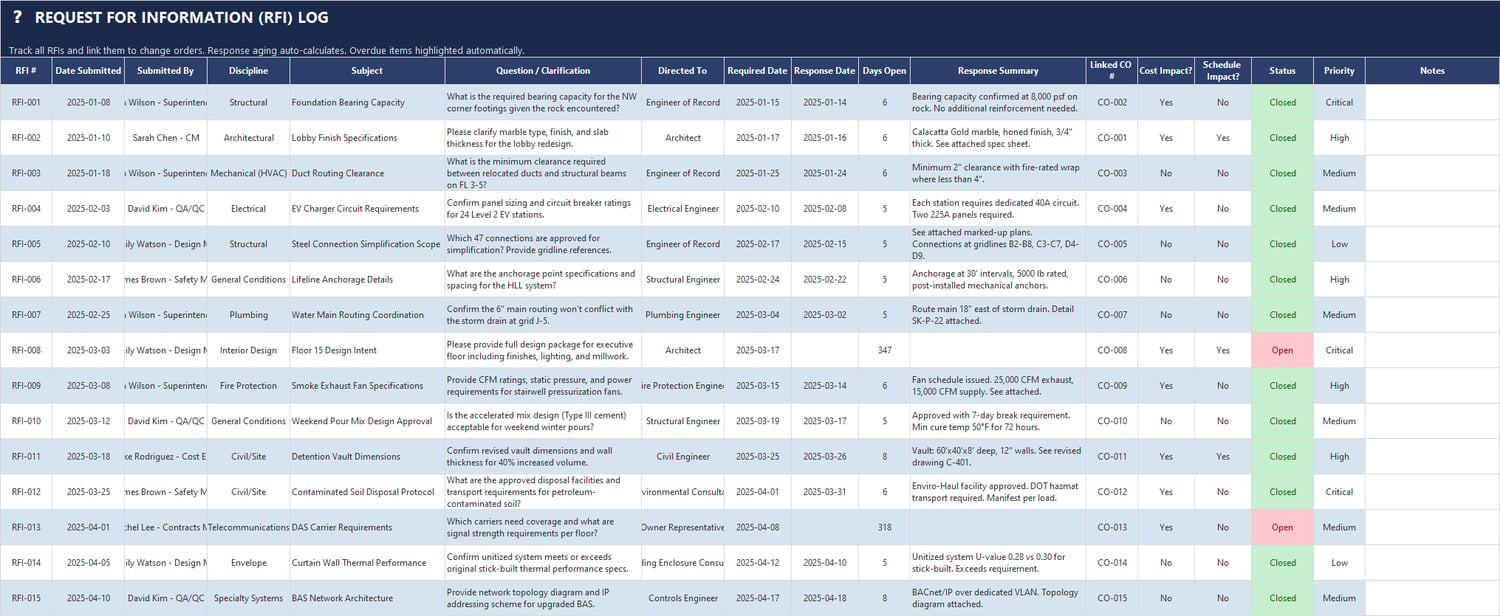
8) Request for Information (RFI) Log
RFI control linked to cost/schedule impacts and change-order references.
Includes:
- RFI dates, discipline, and subject
- Directed party and required/response dates
- Days open auto-aging visibility
- Cost impact and schedule impact flags
- Priority and close/open status
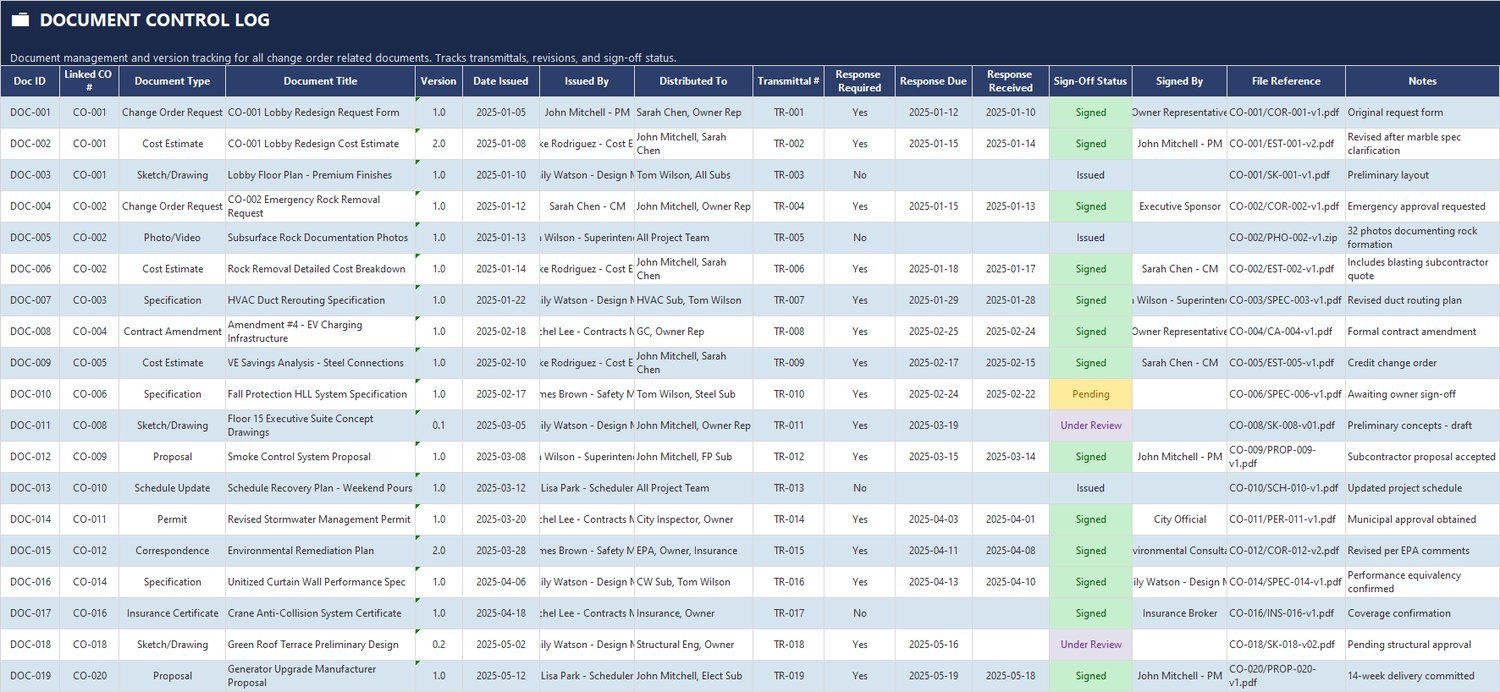
9) Document Control Log
Full transmittal and version-control tracking for all change-related documents.
Track:
- Document type, title, and revision
- Distribution and transmittal numbers
- Response requirements and due dates
- Sign-off status and signer
- File references and notes
10) Stakeholder Communications Log
A dedicated communication register for decisions, commitments, and follow-up actions.
Includes:
- Communication type (meeting, email, call, site visit, formal letter, etc.)
- Linked CO reference
- Participants/attendees and key decisions
- Action items, owners, and due dates
- Follow-up requirement and follow-up date
- Completion status and communication notes
11) Monthly Trend Analysis
A performance summary sheet for month-by-month governance and portfolio reporting.
Analyzes:
- COs submitted, approved, and rejected
- Monthly and cumulative cost impact
- Average cost per CO and max single CO cost
- Monthly schedule impact days
- Average approval cycle time
- % approved and % within SLA
- Cumulative totals for leadership reporting
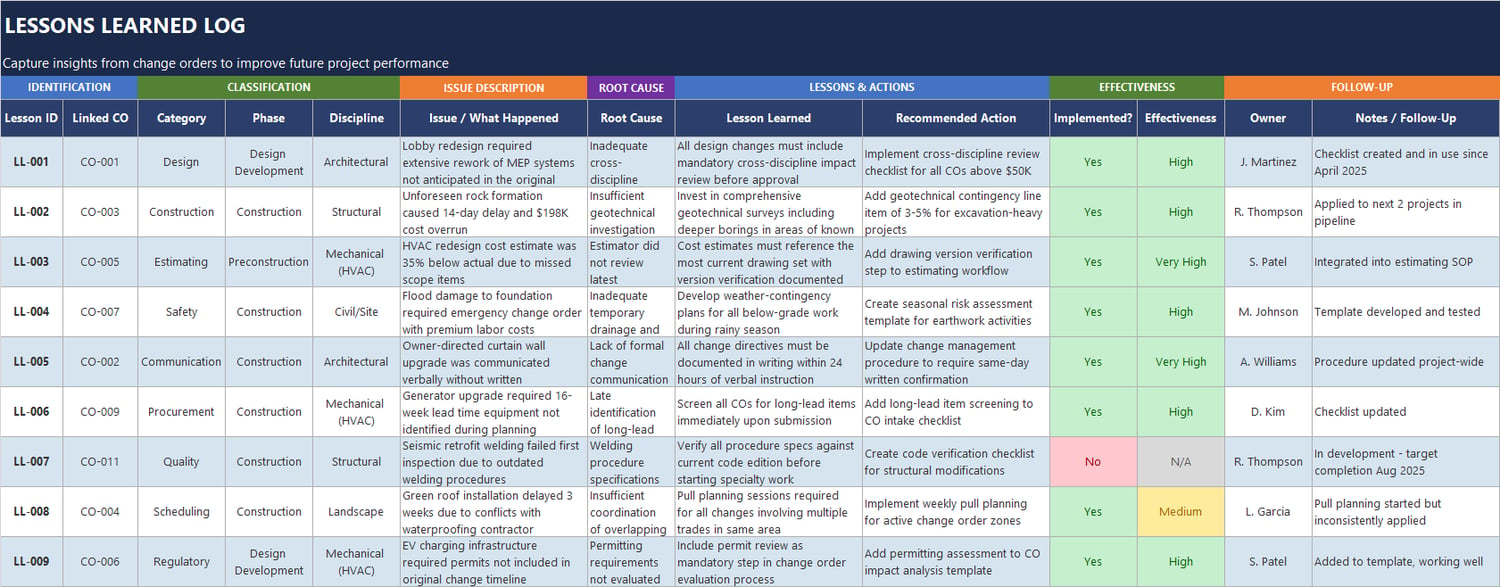
12) Lessons Learned Log
Continuous improvement sheet for converting project changes into future performance gains.
Capture:
- Issue category and root cause
- Lesson learned narrative
- Recommended corrective action
- Implementation status and effectiveness rating
- Ownership and follow-up notes
Who Should Use This Template
This workbook is ideal for:
- Construction Project Managers
- Construction Managers
- Cost Engineers / Quantity Surveyors
- Planning & Scheduling Engineers
- Commercial Managers
- PMO & Program Controls Teams
- Design-Builder and EPC project teams
- General Contractors and Owner-side teams
Key Benefits for Your Team
- Improved Control: One integrated system instead of scattered files
- Faster Decisions: Clear data for cost/schedule/approval trade-offs
- Better Forecasting: Early visibility into cumulative impact trends
- Stronger Governance: SLA tracking and approval accountability
- Reduced Risk: Proactive mitigation linked directly to each change
- Cleaner Handover: Complete audit trail of documents and communications
- Executive Clarity: Ready-to-present dashboard insights anytime
How It Works
- Record each change in the Change Order Log
- Quantify financials in Cost Impact Analysis
- Assess timeline effect in Schedule Impact Tracker
- Route decisions through Approval Workflow Tracker
- Update project financial position in Budget Summary & Forecasting
- Track associated RFIs, Documents, and Communications
- Review Risk Matrix, Monthly Trends, and Lessons Learned
- Report status to leadership using the Executive Dashboard
Professional Outcome
By implementing this template, your team can transform change management from a reactive administrative task into a strategic project control process—protecting margin, maintaining schedule integrity, and improving stakeholder confidence across the entire project lifecycle.